Living in South Wales
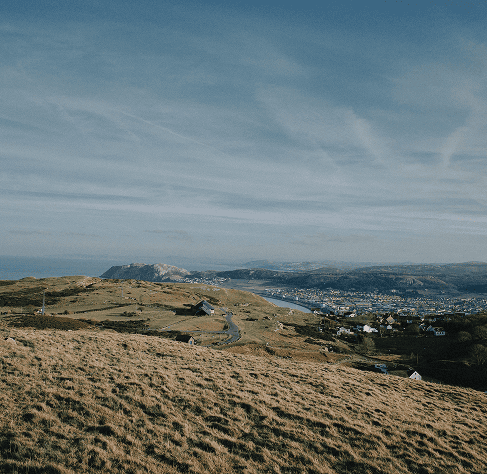
Swansea is a city built around a five-mile bay, with a national landscape at one end and a national park up the valley behind it. Between those two you get a lot of different places to live in not very many miles.
We sell across all of them, so this guide covers the lot – what each area is like, what the schools are, and how long it takes to get anywhere.
Mumbles and the coast
Oystermouth · Newton · Langland · Caswell · West Cross · Bishopston · Pennard · Southgate – SA3
Mumbles is the headland at the western end of Swansea Bay, five miles from the city centre along the seafront. Oystermouth is the village at the middle of it – the square, the shops along Newton Road, and a castle whose keep dates from the early twelfth century and which Edward I visited in 1284.
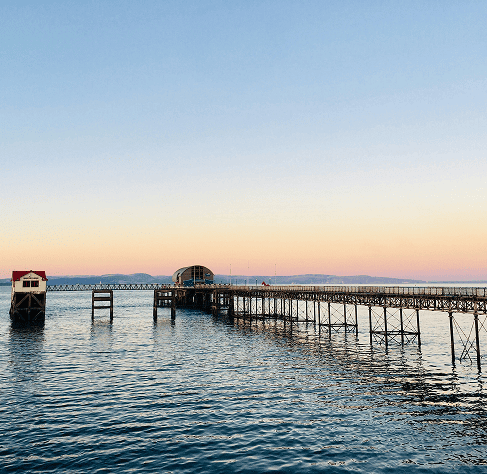
It works the way a good village works. Butcher, wine merchant, bookshop, a dozen independents, and Joe’s Ice Cream on Mumbles Road since 1984. The pier opened in 1898 and the lighthouse has stood on the headland since 1794.
Round the corner are the beaches. Langland and Caswell both hold Blue Flags, with RNLI lifeguards daily from early May to mid-September, and Caswell has beach wheelchairs to book free of charge. Langland’s terrace of beach huts includes some dating from 1923. Inland, Bishopston and Pennard are greener and quieter, with their own shops, pubs and medical centre, and National Trust coast and valley behind them.
Schools. Oystermouth, Newton, Grange and Bishopston primaries, plus Pennard – none currently in an Estyn follow-up category. Bishopston Comprehensive takes around 1,118 pupils, came out of its July 2025 inspection with no follow-up category, and completed the first phase of a £13.8m refurbishment in 2021.
Getting about. Five miles to the city centre, M4 J42. Best of all, the Swansea Bike Path runs 5.8 miles into town entirely traffic-free, following the old Mumbles Railway – which in 1807 carried the world’s first fare-paying railway passengers, eighteen years before Stockton and Darlington.
Suits: downsizers and retirees, who get flat walking and shops without a car; families, for the schools and the villages behind the seafront.
The Gower Peninsula
Reynoldston · Rhossili · Llanrhidian · Penclawdd · Port Eynon · Llangennith · Three Crosses · Parkmill – SA3 and SA4
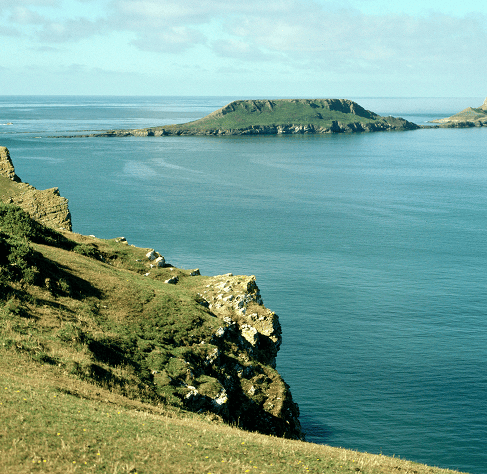
In 1956 the Gower became the first place in the United Kingdom designated an Area of Outstanding Natural Beauty. Seventy years on, it is still why a lot of people move to Swansea at all.
Seventy square miles running west from the edge of the city, and two distinct halves. South Gower is the postcard: limestone cliffs, Three Cliffs Bay, Oxwich, Port Eynon with its Blue Flag, and the three miles of sand at Rhossili where the ribs of the Helvetia, wrecked in 1887, still show at low tide. North Gower is quieter – saltmarsh running into the Loughor estuary, cockles gathered at Penclawdd since Roman times, and salt-marsh lamb that in 2021 became the first British product protected under the UK’s own scheme.
The villages have real character and real differences. Penclawdd and Three Crosses are proper villages with shops and schools. Llanrhidian has a primary, two pubs and a shop. Reynoldston has 439 people and one of the longest-running community broadband schemes in the country, going since 2003. Llangennith is a church, a pub and the best surf on the peninsula.
Schools. Knelston and Llanrhidian primaries both came through recent Estyn inspections without a follow-up category; the Three Crosses school is Crwys Primary. Secondary children go to Bishopston Comprehensive, with school buses from the villages, and on to Gower College Swansea with a bus of its own. For Welsh-medium secondary, Ysgol Gyfun Gŵyr at Gowerton takes around 1,156 pupils.
Getting about. Penclawdd is about 18 minutes from the city centre, Reynoldston about 25. Gowerton station has free parking and step-free access to both platforms.
Suits: families who want an outdoors childhood; remote workers; anyone after space, a view and a coast path at the end of the road.
Sketty, Uplands and west Swansea
Sketty · Uplands · Brynmill · Derwen Fawr · Tycoch · Killay · Dunvant – SA2
The part of Swansea that most often sells itself on schools – and where a lot of Mumbles and Gower buyers started out.
Uplands is a mile west of the centre and the closest Swansea gets to an urban village: independent shops and restaurants along Uplands Crescent, a market in Gwydr Square on the last Saturday of every month, and a run of large houses behind. Dylan Thomas was born at 5 Cwmdonkin Drive in 1914 and lived there until he was nineteen; the house is a museum now, and the park across the road is the one in The hunchback in the park.
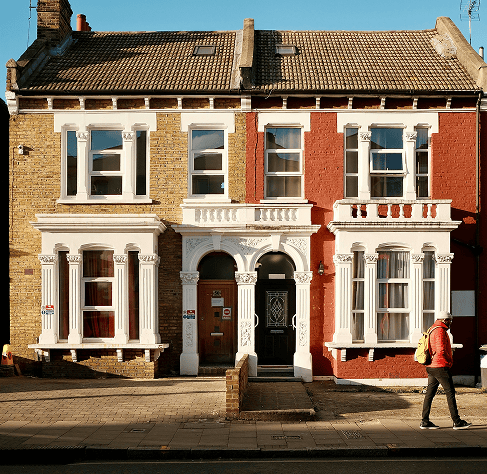
Sketty is bigger and more varied than its reputation – Victorian and Edwardian villas through to post-war semis, with shops, a pharmacy and a bakery that has been at Sketty Cross since the 1940s. Derwen Fawr is the smart corner near Singleton Park and the sea. Killay is the last suburb before the Gower, with common land to the south that sits inside the AONB. Dunvant has the Clyne Valley cycle track running through it into town, and a male voice choir founded in 1895 – the longest-running in Wales.
Schools. Olchfa on Gower Road has around 1,907 on roll and a sixth form of 466, and came out of its November 2025 Estyn inspection with no follow-up category. Bishop Gore, also in Sketty, likewise. Primaries include Sketty, Parkland, Brynmill, Dunvant and Hendrefoilan at Killay, which was doubly oversubscribed in 2022/23. Welsh-medium primary is Ysgol Gynradd Gymraeg Bryn-y-Môr in Brynmill.
Green space. Better than almost anywhere urban in Wales. Singleton Park runs to 250 acres with botanical gardens dating from 1926 and a boating lake. Clyne Gardens holds more than 800 rhododendrons, three national plant collections and Britain’s tallest recorded magnolia, and opens up each May for Clyne in Bloom.
Suits: families, for the schools; professionals, for the ten-minute run into town; first-time buyers looking on the west side of the city.
The city and the waterfront
City centre · Maritime Quarter · SA1 Waterfront · St Thomas – SA1
The part of Swansea that has changed most, and the part people’s mental picture is usually out of date on.
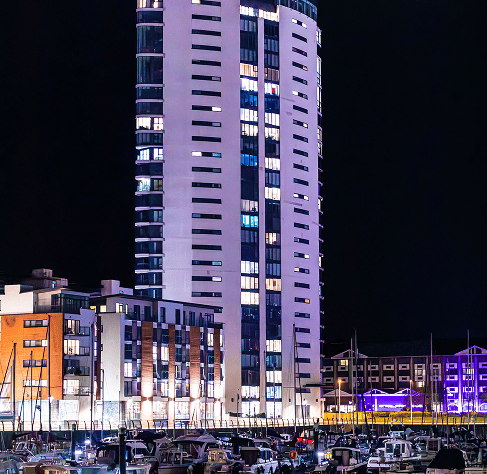
The Maritime Quarter grew out of the old South Dock; the marina opened in 1982 and now has around 585 berths, with Meridian Tower above it – 29 storeys, completed in 2008, and still the tallest building in Wales. East of the river, SA1 Waterfront brought apartments, offices and, since 2018, the UWTSD Waterfront Campus. The National Waterfront Museum sits between the two.
In the centre, the last four years have been busy. Copr Bay opened in 2022 with a 3,500-capacity arena wrapped in 93,000 LEDs, a park and a bridge across Oystermouth Road. The Albert Hall reopened in 2024 as a food hall, the Palace Theatre – a building from 1888 – reopened the same year as Tramshed Tech, and Y Storfa opened in December 2025, putting the central library, the archives and Citizens Advice into the old BHS on Oxford Street. A few minutes away, Swansea Market – the largest indoor market in Wales – still sells Penclawdd cockles, laverbread and Gower salt-marsh lamb.
Getting about. M4 J42 runs straight in on Fabian Way and serves both university campuses. Swansea station is the third-busiest in Wales: Cardiff in about 50 minutes, London Paddington from about 2 hours 45.
Suits: young professionals; people relocating who want something low-maintenance while they get to know the city; downsizers who would rather have a balcony than a garden.
Gowerton, Gorseinon and the north-west
Gowerton · Gorseinon · Loughor · Penllergaer · Pontarddulais – SA4
The quiet workhorse of the Swansea market.
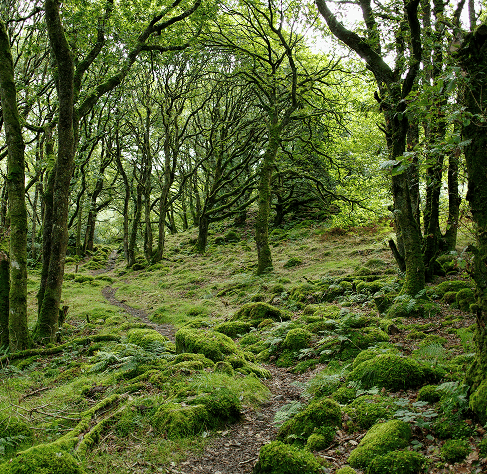
Gowerton calls itself the gateway to the Gower and geographically that is exactly what it is – the last town before the peninsula, with a railway station, a golf course and a sports complex, and enough of a history in steel to have left it a solid stock of family housing. It hosted the National Eisteddfod in 1980. Penllergaer sits on the M4 with Penllergare Valley Woods behind it, a Victorian estate laid out by the photographic pioneer John Dillwyn Llewelyn, with lakes, waterfalls and an observatory from the 1850s, restored with £2.4m of Heritage Lottery funding.
People move here for the M4 and for the schools. J47 puts Cardiff inside an hour. And this is where Swansea’s Welsh-medium secondary sits – Ysgol Gyfun Gŵyr at Gowerton, around 1,156 pupils, of whom only about 27.5% come from Welsh-speaking homes. For families who want their children educated through Welsh without speaking it themselves, that is a real draw, and it pulls buyers from across the city. Welsh-medium primaries feeding it include Pontybrenin at Gorseinon and Bryniago at Pontarddulais.
Suits: first-time buyers and young families; commuters; anyone choosing Welsh-medium education.
The Swansea Valley
Clydach · Morriston · Llansamlet · Birchgrove · Glais – SA6 and SA7
Head north and the bay gives way to the Tawe valley.
Clydach is six miles from the centre and still a working village in a way few places are: the Mond has been refining nickel here since 1902 and remains the largest refinery of its kind in Europe. The river beside it has recovered enough to hold salmon and trout again, there is an RSPB reserve at Cwm Clydach behind the village, and the Swansea Canal – built in the 1790s – still holds water for about five miles up to Pontardawe, with a cycle route alongside it.
It is also one of the most Welsh-speaking parts of Swansea, with Welsh the first language of around a quarter of residents, and it has its own Welsh-medium primary in Ysgol Gynradd Gymraeg Gellionnen. Secondary is Birchgrove Comprehensive. Morriston has the hospital – 750 beds, the Welsh Centre for Burns and Plastic Surgery, and the regional cardiothoracic and major trauma centres for south-west Wales.
Keep going and the valley runs into Bannau Brycheiniog and waterfall country, where Sgwd yr Eira is the fall you can walk behind. Craig-y-Nos, at the head of the valley, is the castle the opera singer Adelina Patti bought in 1878 and fitted with her own theatre, opened in 1891 and Grade I listed. On the way there, Pontardawe Arts Centre has been doing theatre, film and music in a converted 1908 public hall since 1996.
Suits: anyone who wants more house and more space without adding to the commute; families wanting Welsh-medium education in a Welsh-speaking community; walkers and cyclists.
View our Properties
Find out what all the fuss is about
Whether you know exactly what you’re looking for or you’re just beginning to explore, our team is here to help – no pressure.
Sales enquiries: 01792 805 075